
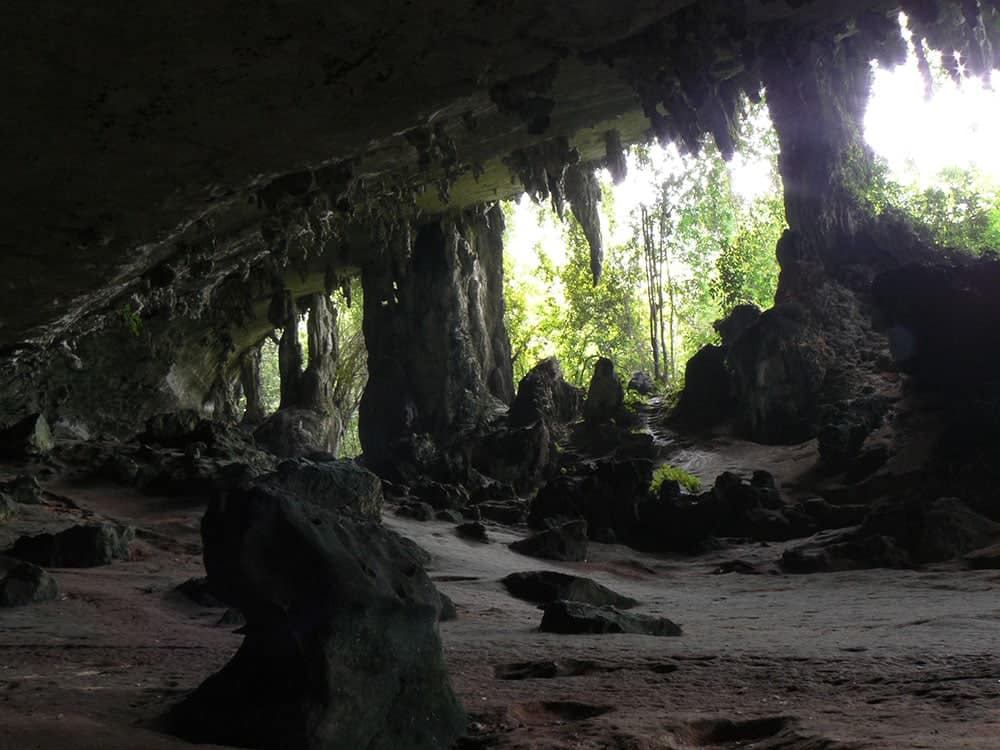
Niah National Park in Northern Sarawak is known for its vast limestone caves that hold ancient paintings and burial grounds and human remains that date back 40,000 years. One thing that most Gua Niah tour packages don’t tell you is that this UNESCO Heritage Site offers the most underrated birding experience. Through the maze of caverns and winding boardwalks, birding at Niah is wonderfully wild yet accessible.
10 birds to spot at Niah National Park
Come for the caves, stay for the lush primary rainforest. As you travel along the boardwalk, you’re flanked by wild orchids, towering benuang trees and giant pandanus plants. Birdwatchers know that the real treats lie between the trees and high up in the skies.
1 Rainforest royalty
The Rhinoceros Hornbill is Sarawak’s iconic state bird. This pre-historic looking bird soars high above the canopy and can be found near tall fruiting trees. You’ll know it by its distinct enormous orange casque and booming calls that echo through the jungle. This majestic bird is a protected species. Spotting a pair gliding through the early morning or late afternoon light is a special Borneo moment.
2 Best dressed
The Black and Red Broadbill perches perfectly still, waiting patiently for passing insects, which it snaps up with lightning precision. It looks like it’s dressed to the nines, ready to go to the ball. They are usually spotted along the quiet streams and shaded edges of the boardwalk.
3 Neon ninja
Spotting a Blue-eared Kingfisher feels like catching a glimpse of some rainforest magic. This bird streaks past in a flash of electric blue. Blink and you’ll miss it. You’ll have a better chance if you head to the streams, muddy trails and pools.
4 Singing leaf
The Greater Green Leafbird is an endangered species. True to its name, this master of camouflage blends so well into its environment, it nearly disappears. This bird gives itself away with an impressive musical singing. Try to spot them in flowering and fruiting trees along the national park’s many trails.
5 Sky sheriff
You’ll likely hear the Crested Serpent Eagle before you see it. It makes loud, distinct calls, high-pitched whistles or squeaks, much like an alarm. It’s seen circling high overhead, scanning the jungle like a watchful guardian. It can be spotted soaring above the canopy from late morning.
6 Night watcher
As the sun goes down, the Buffy Fish Owl’s watch begins. This large owl adds a mysterious flair to evenings in Niah National Park with its deep hoots that echoes through the jungle. To find them, head to the riversides or open areas at dusk.
7 Lady in red
The Scarlet Rump Trogon is the smallest of the Asian trogon species and is native to parts of Southeast Asia. It is distinguishable by its dark red hues, with some pops of blue, deep colours that look almost painted on. It feeds on bugs and insects and hunts by patiently perching in wait for its prey. They can be spotted on mid-level branches, sitting still for long periods.
8 Life of the party
Oriental Pied Hornbills are known to be raucous and noisy, letting out loud, penetrating calls like cackles and squeals. Better yet, their casques serve as amplifiers, so you’ll definitely hear them. They’re Niah’s most approachable celebrity, often flying low over walkways as if checking out the visitors. They can be found on the edges of the jungle, clearings or near the park buildings.
9 Flying sugar rush
The Little Spiderhunter is adorable as its name. Always on the move, flitting quickly between blossoms like it had too many sips of nectar. Its distinct long, curved bill and constant wing flicks gives it a unique frantic charm. You’ll notice them zipping and buzzing through Niah’s flowering shrubs and along the boardwalks.
10 Masters of the dark
The Swiftlet can be seen by the thousands in the Great Cave and other limestone caverns. They produce edible nests, highly sought after luxurious and expensive delicacies by the Chinese. Swiftlet nest gathering has been a trade that sustained indigenous communities here for hundreds of years.
Birders, don’t miss the opportunity to see swiftlets in action. At dusk, head to the Great Cave where thousands of swiftlets dart in by echolocation, to roost for the night. At the very same time, thousands of bats form a swirling ribbon as they head out to feed. This ritual is reversed at dawn. It’s truly an unforgettable performance of nature.
Top tips for the beginner birdwatcher
Early mornings and late afternoons are best for birdwatching.
The dry season makes the trails easier to navigate. Aim for March to September.
Secure your Niah National Park accommodation early. Sutera Sanctuary Lodges operates one of the finest Sarawak rainforest resorts here.

Pack comfortable walking shoes, a torch and insect repellant.
Bring your binoculars. Standard 8×42 type works because they are bright and have a wide field of view, making it easier to find birds and follow them in flight.
An average mirrorless camera with a 150mm telephoto lens is more than enough to capture beautiful bird photos.