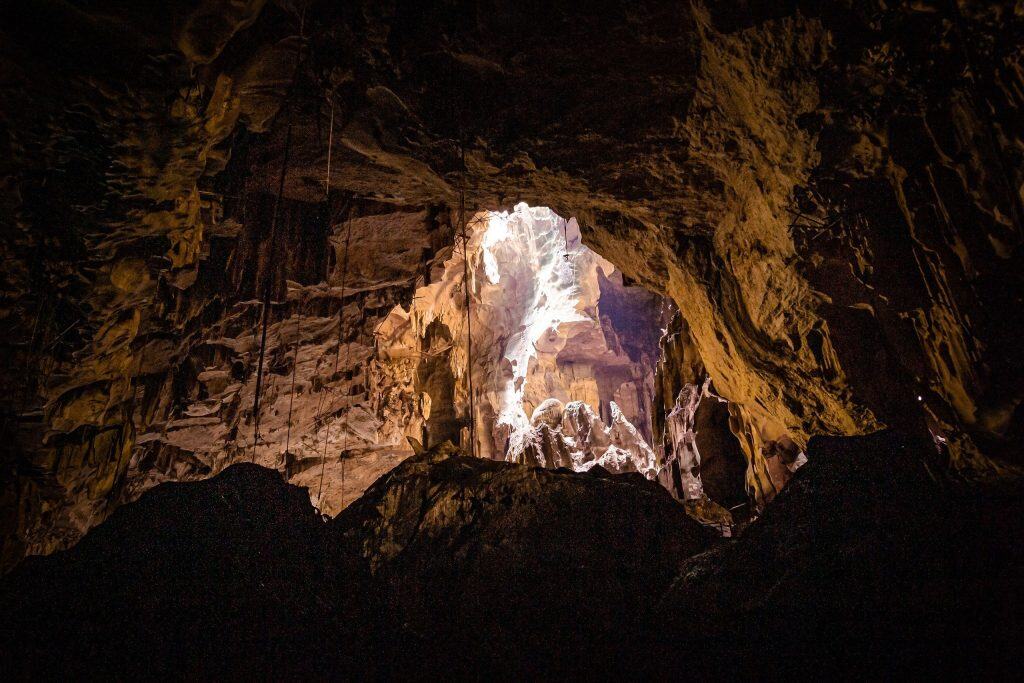
Visiting Niah’s Great Cave feels less like entering a site and more like being welcomed into an ancient world. The Great Cave is breathtaking: a vast natural cathedral where you step into a story more than 40,000 years old, its towering limestone chambers once sheltered Southeast Asia’s earliest inhabitants. Here, tourism is more than exploration; it is participation in living heritage. So, if you’re planning to book a Gua Niah tour package, these insights into the local communities will enrich your journey.
Longhouses of Niah
The Iban community in Niah have long made this region home, known for their communal lifestyle and intricate weaving traditions. Just a short plank walk from the entrance of the Great Cave, visitors will find Rumah Patrick Libau, a 30-door Iban longhouse homestay. Storytelling unfolds on the ruai, the shared veranda connecting each family’s space. Visitors are often invited to join the ceremonial Ngajat dance and enjoy a lunch of local cuisine, creating a warm glimpse into longhouse life.
Keepers of the jungle
The Penan are one of Borneo’s last semi-nomadic Indigenous peoples. For centuries, they lived according to the rainforest’s rhythms, guided by a deep respect for the land. Today, many Penan families around Niah have settled into small villages, balancing traditional forest knowledge with modern livelihoods. Their philosophy of molong—taking only what is needed and protecting the rest—reflects a sustainable way of life that makes them natural stewards of Niah National Park.
Harvesting the sky
High within Niah’s limestone vaults, thousands of swiftlets build delicate nests from threads of saliva and feathers. Once collected, the nests are carefully cleaned and cooked into soups believed by many Chinese communities to have rejuvenating qualities, making it a prized delicacy. Birds’ nest harvesting at Niah Cave began more than 200 years ago and continues to support the livelihoods of many local families.
The process itself is remarkable. Penan and Iban collectors climb handmade bamboo scaffolds to dizzying heights, using skills passed down through generations. Nests are only taken after the young birds have flown, ensuring no premature harvesting and no harm to the swiftlets.
Harvesting the ground
As you move deeper into the cave, the sound of echoing voices mingles with the squeaking of millions of bats and swiftlets, creating an otherworldly atmosphere. These voices belong to guano collectors working by the glow of paraffin lamps as they gather the bird and bat droppings that carpet the cave floor. The guano is packed into sacks, carried to the Niah River, and later graded and sold as fertiliser.
Tourism meets tradition
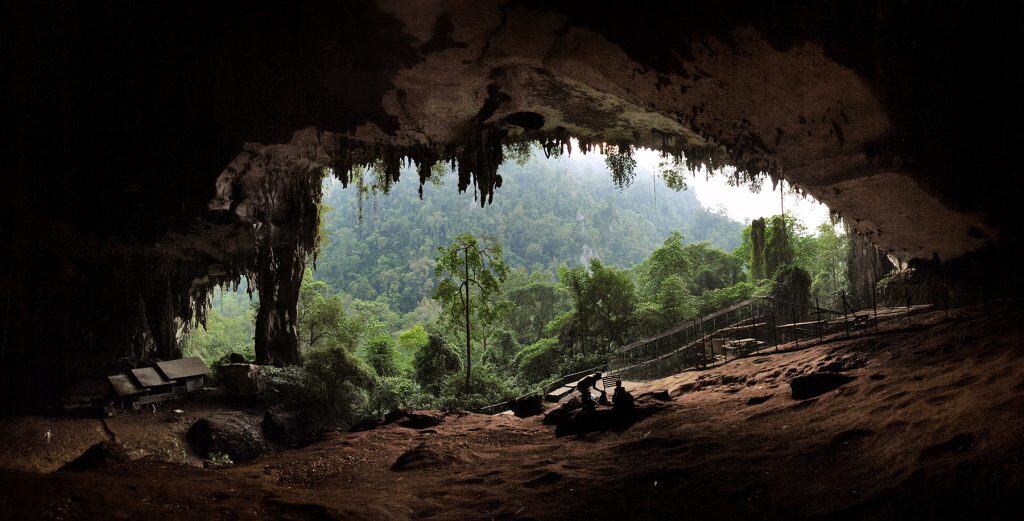
For travellers, Niah National Park offers a blend of nature, history, and culture. A wooden walkway leads through dense rainforest, crosses the Niah River, and guides visitors towards the Great Cave’s entrance. The caves are not only archaeological landmarks but also places of ongoing cultural and ecological importance.
At the park entrance, you’ll find stalls selling rattan baskets, beadwork, and forest products crafted by Penan and Iban artisans. As conservation partners, these communities help protect swiftlet populations and cave ecosystems. Others welcome visitors into homestays or guide jungle treks, interpreting flora and fauna, explaining cave formations, and sharing knowledge of medicinal plants and forest survival techniques.

Niah National Park remains one of Malaysia’s most treasured sites. To experience its attractions at an unhurried pace, stay a night at Sutera Sanctuary Lodges’ Niah National Park accommodation. Check into the Niah Cave hotel’s Painted Suite, inspired by the 1,200-year-old cave wall paintings.
Book your stay at the Gua Niah resort with Sutera Sanctuary Lodges now